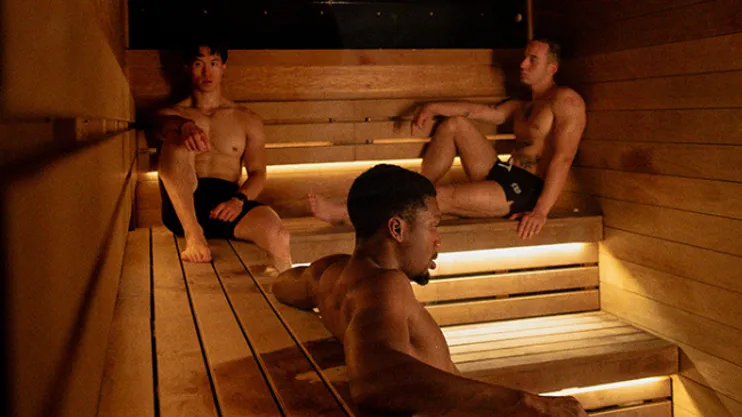
Heat, cold and the art of doing both – your guide to contrast therapy
Whether you’re just starting out, upping your game or pushing your limits – you’ve probably noticed that heading to the gym seems to mean much more than smashing a few reps out these days.
While it may have once only been something professional athletes bothered with, more people than ever are adopting their own recovery routines. And it’s become a lot more sophisticated than a quick stretch and foam roll, too.
Sauna, steam rooms, cold plunges – these are the kinds of facilities that fitness-focused individuals want to get their hands on to improve their training experience – with good reason.
The science behind thermotherapy is compelling, growing and getting harder to ignore. While benefiting different systems and suiting different goals, combining both heat and cold in a recovery routine can be a great way to enhance workout results.
But how does it work, exactly? Here’s the lowdown on what each one offers… and how you can use them together for maximum effect.
The benefits of sauna
Of all the thermal therapies, the benefits of sauna are the most researched and well-known.
Used across Scandinavia for centuries, it’s no simple wellness trend. (In fact there are 3 million saunas for Finland’s population of 5.5million alone…)
Bringing people together for physical restoration and mental silence, sauna is a cultural cornerstone for many Nordic communities – and now, its health benefits are embraced by many across the world.
Heart health
The cardiovascular case for regular sauna use is well-established. A landmark 2015 study published in JAMA Internal Medicine, following over 2,000 Finnish men for more than 20 years, found that those who used the sauna four to seven times per week had a 63% lower risk of sudden cardiac death compared to those who went just once a week. The more frequently people sauna bathed, the greater the protective effect.
This is largely down to its promotion of improved blood vessel function, reduced arterial stiffness and favourable shifts in blood pressure over time. A 2025 review in Frontiers in Cardiovascular Medicine went further, concluding that sauna produces a cardiovascular stimulus that could be broadly compared to moderate exercise.
Mental health
The same 2024 review found consistent evidence linking regular sauna use to lower reported levels of stress, anxiety and depression. It also noted early findings suggesting sauna may reduce the long-term risk of certain neurodegenerative conditions, though the research is currently light.
That being said, a 2025 UCSF clinical trial did find that whole-body heat therapy combined with cognitive behavioural therapy produced clinically meaningful reductions in major depressive disorder symptoms – as seen in over 85% of participants.
How long and how often?
How long you stay in really depends on where you're starting from. If you're new to sauna, Finnmark Sauna – UK specialists with over a decade in the game – suggest keeping it to 5-10 minutes at first. From there, most people work up to 12-20 minutes over the following weeks, with experienced users comfortably going 20-30. The research showing the biggest cardiovascular benefits tends to use sessions at the longer end of that range, done four to seven times a week. But honestly, turning up regularly matters more than how long you stay each time.

The benefits of steam
The steam room works on a similar principle to the sauna – with heat exposure producing physiological responses. But there’s one key difference… humidity.
Where your traditional sauna might run at 70-100°C with low 10-20% humidity, a steam room sits at 40-50°C with near 100% relative humidity.
But admittedly, evidence-wise, things get little foggy too. With fewer steam-specific studies, long-term cardiovascular outcome data largely comes from dry sauna research.
The underlying responses may be similar, but steam rooms haven't yet accumulated the same volume of longitudinal research. That said, there are some advantages where steam has an edge.
Respiratory health
Humid air is a natural expectorant. Steam opens restricted airways, thins and dislodges mucus and soothes inflamed airways – making it particularly useful for anyone managing mild asthma, seasonal allergies or congestion. Research cited in Mayo Clinic Proceedings confirms that heat-based therapies improve lung function, enhancing vital capacity and ventilation.
Skin health
The high humidity of a steam room hydrates the skin from the outside in – opening pores, supporting moisture retention and preventing the drying effects associated with dry heat. This is where steam holds a genuine advantage over the sauna, particularly for people with dry skin.
Muscle recovery
Post-exercise heat therapy has strong evidence for reducing muscle soreness and accelerating recovery. A 2015 study in the Journal of Clinical Medicine Research found that moist heat reduced DOMS markers more effectively than dry heat in the immediate post-exercise window – making the steam room a solid post-training recovery tool.
How long?
Because the humidity can make the heat feel more intense, steam room sessions are usually advised around the 10-15 minute mark. If you’re totally new to steam, start with 5-10.
The benefits of cold water therapy
Cold water immersion (ice bath, cold plunge, cold shower, whatever way you prefer to chill) works on your body in a completely different way to heat. Where a sauna relaxes and opens everything up, cold contracts, invigorates and jolts your system into action. Which is exactly why using both together is something else.
The benefits are well-evidenced and genuinely impressive. Every time you get into cold water, your body triggers a reliable surge of catecholamines – noradrenaline, adrenaline and dopamine. According to Brass Monkey – the UK cold immersion specialists behind our cold plunges – that means noradrenaline levels up by as much as 530% and dopamine by 230%. And unlike a lot of wellness interventions, this response doesn't fade over time. Your body keeps reacting, every single time.
The practical upside? Reduced muscle soreness after high-intensity training, improved mood and focus that can last for hours, and growing evidence for immune system support – including increased levels of lymphocytes and natural killer cells with regular exposure.
All that being said, if building muscle is your main goal, you might want to dip out of this one. Cold water immediately after resistance training can actually work against you by blunting the inflammatory response your muscles need to grow. Save it for after cardio sessions, competition days or particularly heavy training blocks instead.
Want the full picture on temperature, timing, duration and risks? Head to our complete guide to cold plunges.

Contrast therapy: when heat and cold work together
Contrast therapy (alternating between hot and cold exposure) combines the benefits of both into a single, sequenced recovery. In a nutshell, heat causes vasodilation (blood vessels expand, blood flow increases), cold causes vasoconstriction (blood vessels narrow, metabolic waste is flushed). Alternating between the two creates what's sometimes called the vascular pumping effect – a rhythmic expansion and contraction that enhances circulation, oxygen delivery and waste removal.
The evidence for contrast therapy as a recovery tool is solid. Research has consistently found that alternating heat and cold reduces muscle soreness more effectively than passive recovery alone – and appears more effective than cold water immersion by itself.
Beyond the physical, contrast therapy also has meaningful effects on the autonomic nervous system. Cold activates the sympathetic nervous system (aka ‘fight or flight’ response), while heat shifts the body back toward parasympathetic dominance (‘rest and digest’). The alternation between the two builds stress resilience and mood over time.
How to sequence a contrast therapy session
One thing that is important to remember: the order matters. Start hot, end cold, and warm up naturally afterwards.
Starting with heat prepares the body – raising core temperature, relaxing muscles and opening blood vessels before the cold exposure begins. Ending cold maximises the metabolic benefits and the catecholamine release that drives the mood and focus effects.
Warming up naturally afterwards (rather than jumping straight into a hot shower or sauna) preserves the metabolic adaptation the cold triggers.
Here’s a good place to start:
Sauna or steam room: 15-20 minutes
Cold shower or cold plunge: 2-5 minutes
Rest: 5 minutes
Repeat: 2-3 rounds
End on cold… always
Warm up naturally: at least 10 minutes before any external heat source
Finally, build up gradually. If you're new to cold exposure, start with cold showers rather than full immersion, and keep your first contrast sessions on the gentler end of the temperature range.
Who should be cautious?
Both heat and cold therapies carry risks for certain groups. Consult a healthcare provider before starting if you have:
Cardiovascular conditions, including heart disease, high blood pressure or arrhythmia
Raynaud's disease
Pregnancy (both extreme heat and cold immersion carry risks during pregnancy)
Active skin infections or open wounds (steam rooms in particular can be susceptible to bacteria build up)
Stay hydrated throughout any heat session. Avoid alcohol before or during thermal therapy. And never use heat or cold to excess – both dehydration and hypothermia are real risks when sessions run too long.
Experience contrast therapy at Fitness First
At Fitness First, we’re working on introducing the full thermal experience to our clubs – from cold water immersion to sauna and steam.
Whether you're using heat to prepare for training, cold to recover from it, or the combination of both to build resilience and support long-term wellbeing – the tools are here. Find your local club.
Published: 02 November 2026 Last Updated: 02 November 2026